

America’s Largest Concentration Camp Is in El Paso. Why Aren’t We Talking About It?
The government built a $1.2 billion concentration camp in the desert. Now people are dying, getting sick, and cut off from the outside world.

As I walked toward the vigil being held on the street corner outside El Paso’s Camp East Montana, the largest concentration camp in the United States, I started to feel nauseous.
It’s one thing to see pictures or videos. It’s another thing entirely to witness the blinding lights bouncing off the stark white tents America spent more than $1 billion to build last year.
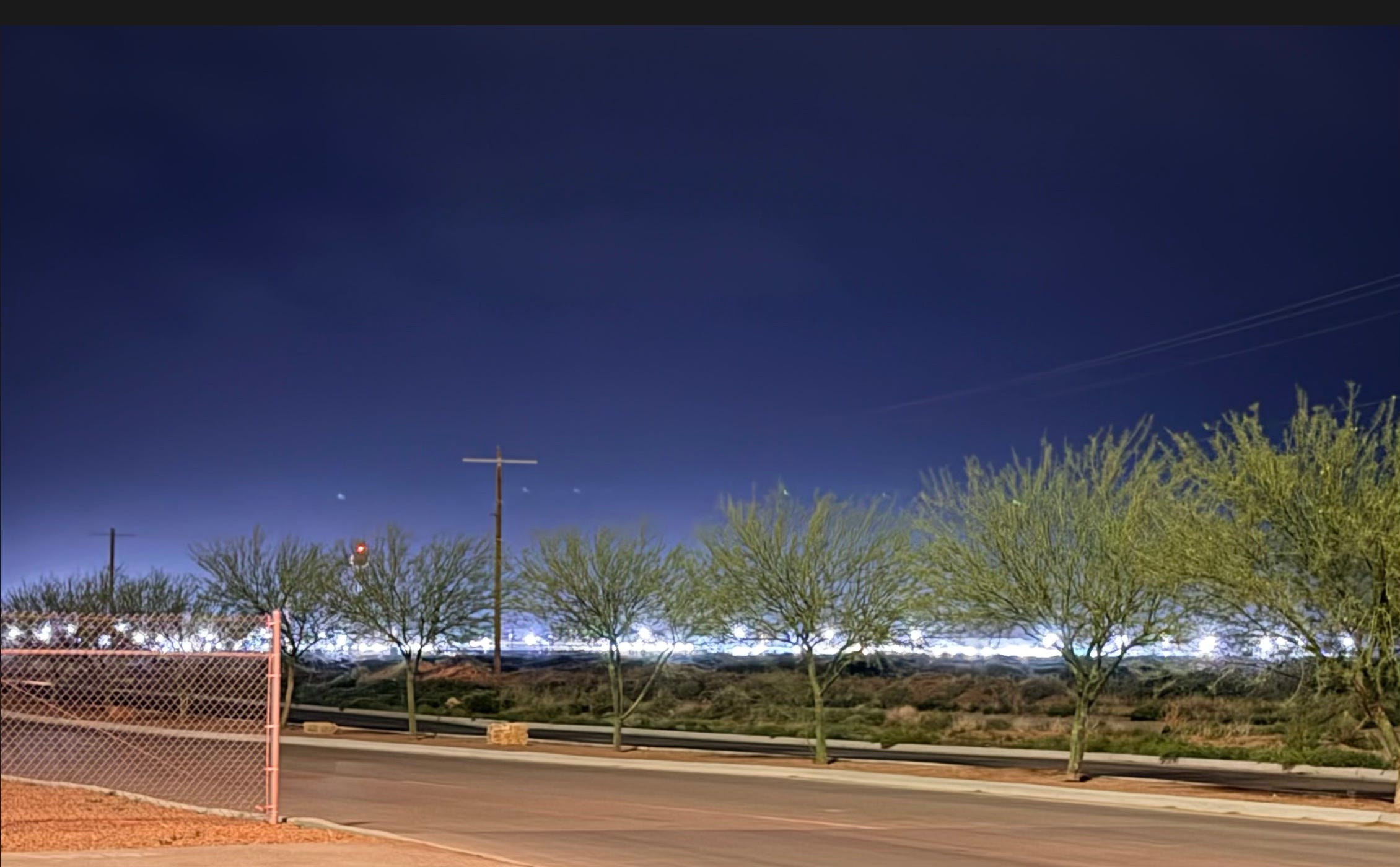
What you just read is correct. That was not a typo. More than $1 billion in American tax dollars was spent on a concentration camp built to hold up to 5,000 human beings in the middle of the desert. In tents.
The scale of it was obscene. Watching buses drive past with more people being taken inside felt even more grotesque. Camp East Montana is what happens when the government builds a concentration camp in plain sight and trusts the public to look away.
But Camp East Montana is not a secret. It just has not received nearly the attention given to Alligator Alcatraz, Delaney Hall or Dilley. Given the conditions people are being held under, it should. Since Camp East Montana began holding detainees in the summer of 2025, at least three people have died there.
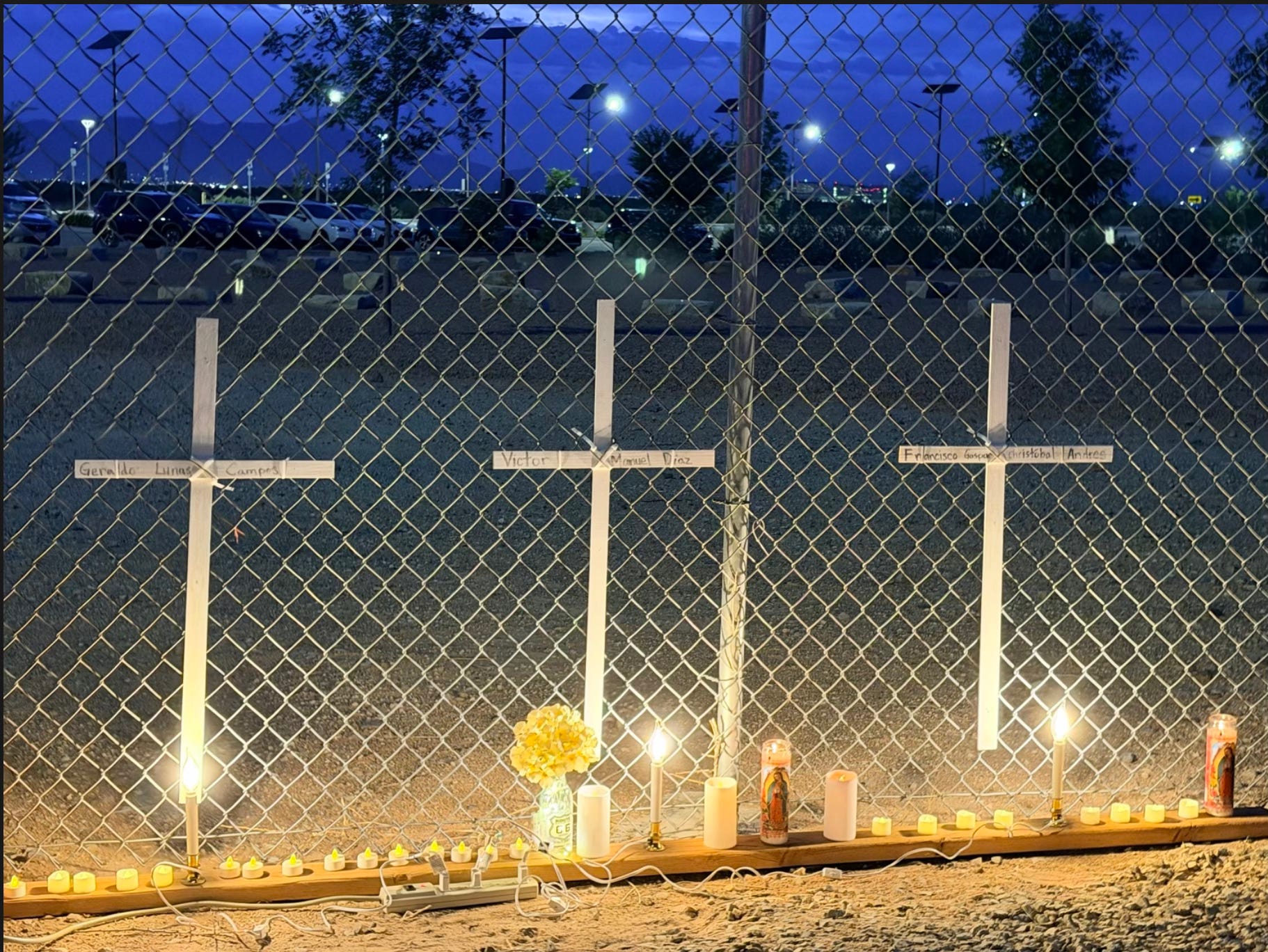
During the vigil, three white crosses stood along the fence. They bore the names of the three men who died: Geraldo Lunas Campos, Victor Manuel Diaz and Francisco Gaspar Christobal.
According to The Texas Tribune, Lunas Campos died from “asphyxia due to neck and torso compression,” based on the autopsy report. That means he was unable to breathe because of pressure on his neck and chest.
But ICE said in a Jan. 9 press release that Lunas Campos died after “experiencing medical distress.” About a week later, ICE told The Associated Press he died after attempting suicide and that ICE staff tried to save him.
At best, those explanations do not line up. At worst, it’s a cover story. The deaths alone should have been enough for an investigation. And based on recent reporting, there could be more crosses to add along the fence.
Medical emergency crews responded to two overdose calls at Camp East Montana over Memorial Day weekend, according to 911 call logs obtained by the El Paso Times through an open records request. The calls involved two men, ages 35 and 34. Their conditions were unknown.
The article said it was unclear whether the men were detainees. But that does not make the calls any less alarming. In fact, it makes them more urgent.
Just two weeks earlier, ABC-7 reported that it had obtained 130 emergency call records from Camp East Montana through an open records request. The calls covered Aug. 17, 2025, through Jan. 20, 2026. These calls included chest pain, seizures, suicide attempts, breathing problems, injuries, possible overdoses and people found unconscious.
The records showed 30 calls involved general medical conditions, 24 involved chest pain or other cardiac symptoms, 17 involved mental health crises, including suicide attempts, suicidal ideation or possible overdoses, and 16 involved seizures.
That is not an isolated problem. That is a pattern.
And the emergencies are not the only warning sign. Disease is spreading there too. According to local reporting, 180 people at Camp East Montana are currently in quarantine due to a measles outbreak.
A measles outbreak inside a concentration camp is not a private problem. It is a public health warning. It means people are being held in conditions where disease can spread, where quarantine becomes another form of confinement, and where the government’s failure to protect people inside Camp East Montana can endanger people beyond it.
The conditions inside Camp East Montana are dangerous even when there is no siren. The Guardian interviewed a released Venezuelan detainee who described dust covering blankets, people coughing and struggling to breathe, freezing air conditioning inside the tents, rain leaking through tarps and people waking up on wet mattresses. He said he lost 25 pounds and came home with a cough that lasted about six weeks. An attorney with the Texas Civil Rights Project said some people detained there rarely left the tents or saw the sun for weeks. One person described it as psychological torture.
During the vigil, I saw potable water trucks coming out of Camp East Montana. So shouldn’t citizens be asking why a $1.2 billion concentration camp built by the American government needs potable water trucked in on a daily basis?
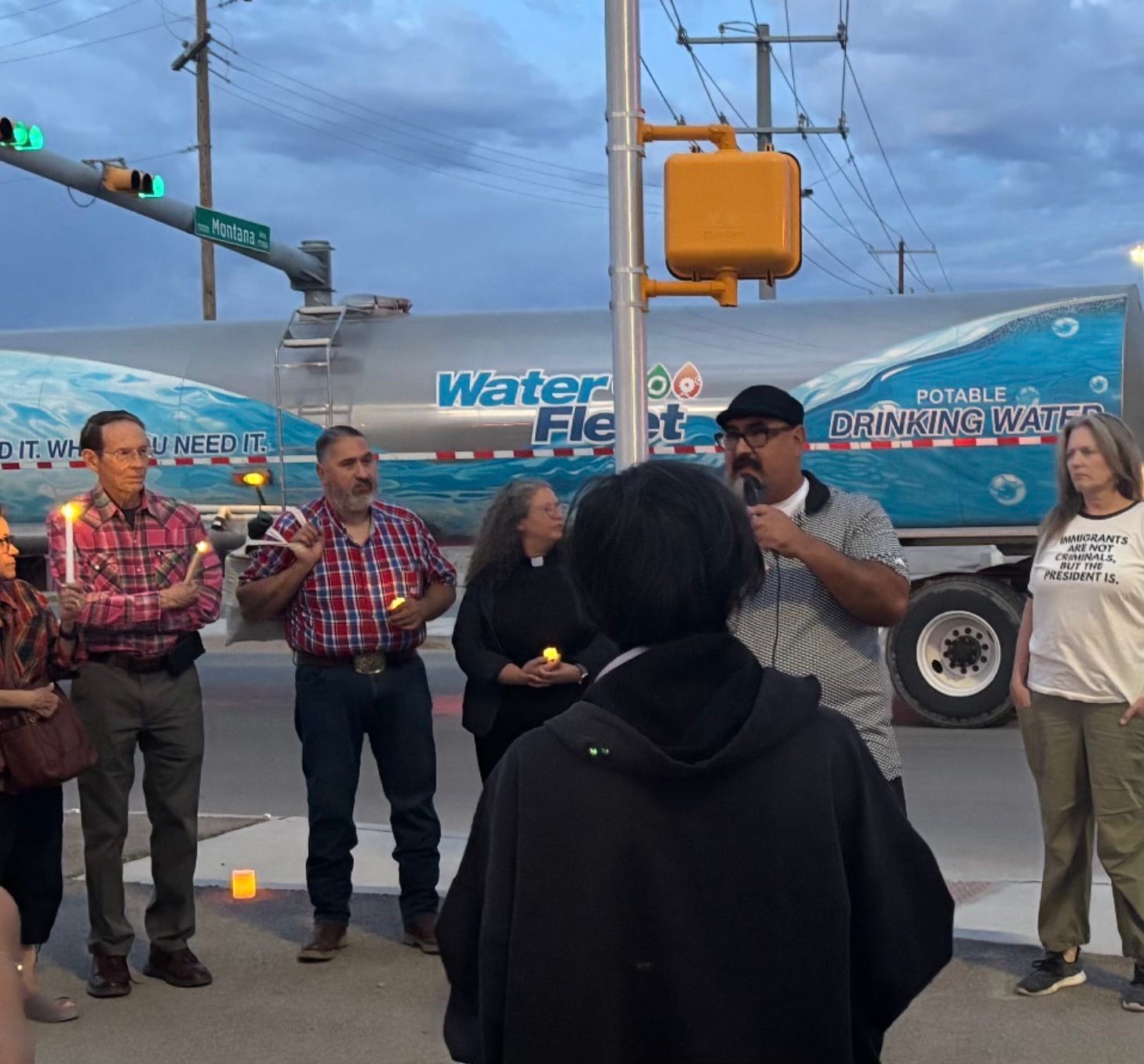
Local advocates also say there is only one iPad available for detainees to contact their loved ones. One iPad for a concentration camp built to hold 5,000 people.
One advocate described speaking with an 18-year-old detained at Camp East Montana who was terrified. He had never been in a position where he had to fight just to contact his family.
That is the cruelty underneath the infrastructure. It is not just tents, floodlights, buses and fences. It is forced isolation. It is fear. It is a teenager trying to reach the people who love him from inside a concentration camp built with American tax dollars.
Reuters reported that ICE’s Office of Detention Oversight found 49 deficiencies at the $1.2 billion Camp East Montana. The ICE report documented 22 deficiencies involving use of force and restraints, 11 involving security and control, and five involving medical care.
Legal and human rights organizations, including the ACLU of Texas, Texas Civil Rights Project and Human Rights Watch, have now sued ICE over conditions at Camp East Montana, citing severe medical neglect, violent use of force and excessive solitary confinement. The lawsuit asks a federal court to stop ICE from continuing to operate Camp East Montana while it remains out of compliance with federal detention standards.
In other words, the government knows.
It knows about the deaths. It knows about the emergency calls. It knows about the suicide attempts. It knows about the overdoses. It knows about the measles quarantine. It knows about the water trucks. It knows about the failures in medical care, use of force, restraints, security, grievance handling and tuberculosis isolation.
And it has kept Camp East Montana open anyway.
People inside a concentration camp do not control the gates. They do not control searches, intake, transport, staff access, contractors, vendors or medical response. If drugs are getting inside Camp East Montana, DHS needs to explain how.
And if people are overdosing inside a concentration camp already tied to multiple deaths, suicide attempts, medical neglect allegations, disease outbreaks and dozens of documented violations, the public should be asking why this place is still open.
Camp East Montana should be shut down.
Congress should investigate every death, every use-of-force incident, every emergency call, every medical crisis and every outbreak inside. ICE should be forced to release the records, contracts, footage and medical-response documents the public has a right to see.
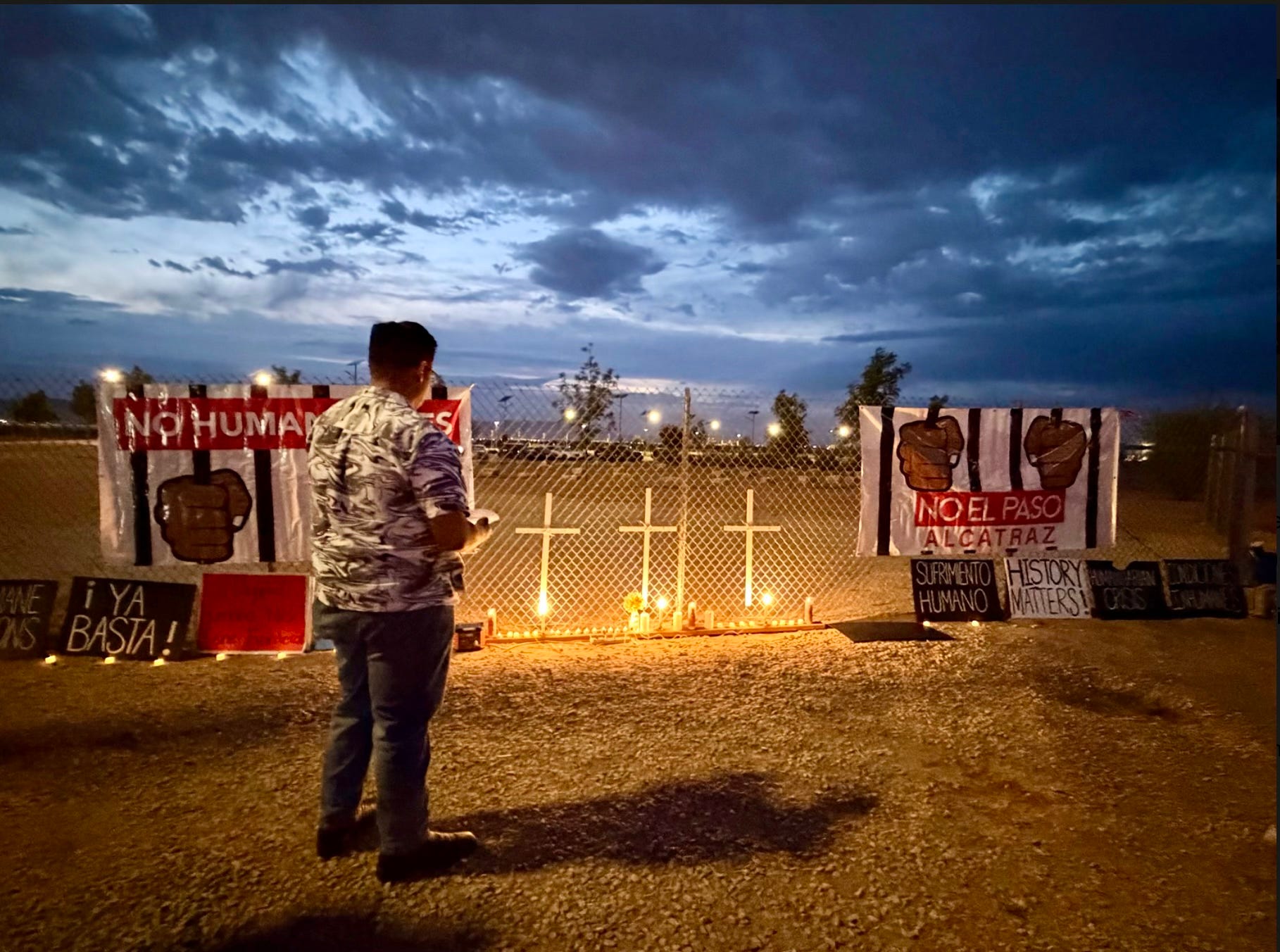
The crosses at the vigil were not just symbols. They were names. They were real men who lost their lives while America looked away.
If you live near the El Paso area, and even if you don’t, the local Indivisible chapter gathers on the street corner right outside Camp East Montana on Sundays at 9 a.m. Other advocacy groups join throughout the day, with protests continuing until 4 p.m.
And if you can’t show up in person, show up in support. Contribute. Send supplies. Amplify the work of the local organizations fighting this evil every day.
And if hearing what is happening to other human beings still does not move you enough to take a stand, go back and read Niemöller’s poem. Then ask yourself which line you are living in.
Author’s note:
Please consider supporting local El Paso organizations doing direct advocacy and mutual-aid work, including Casa Carmelita, Borderland Rainbow Center and Las Americas Immigrant Advocacy Center.
Casa Carmelita — A grassroots mutual-aid collective in El Paso that supports migrants and shelters on both sides of the border with supplies, shelter support, repairs, transportation help and direct community care.
Borderland Rainbow Center — An El Paso LGBTQ+ community center serving queer people and their families through support groups, safe social space, community education, health and mental health resource access, and food pantry services.
Las Americas Immigrant Advocacy Center — An El Paso-based organization providing legal services and advocacy for immigrants, asylum seekers, detained people and families facing deportation.
Thank You for bringing to our attention El Paso Concentration Camp and for naming the organizations that are supporting and advocating for immigrants in El Paso. We need this information.
Thank you for sharing what you are seeing.